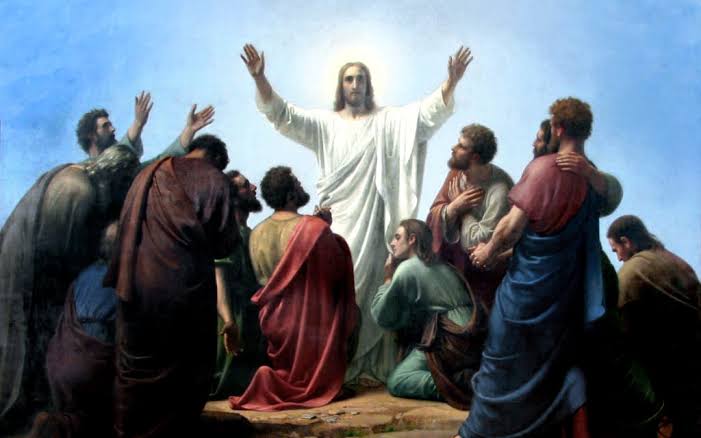

The Sermon on the Mount, recorded primarily in Matthew chapters 5, 6, and 7, stands as a foundational discourse in Christian theology and ethics. Delivered by Jesus Christ, it outlines the core principles and demands of the Kingdom of God, presenting a radical call to discipleship that transcends mere external observance.
The Demands of the Kingdom: Matthew 5; 6:1-18; 7:1-27
The first major section of the Sermon on the Mount lays out the character and conduct expected of those who belong to the Kingdom of Heaven. It contrasts the superficial righteousness of the religious leaders of Jesus’ day with a deeper, heart-level transformation.
- The Beatitudes (Matthew 5:1-12): The Character of Kingdom Citizens Jesus opens the sermon by declaring blessings upon those who embody specific virtues, often counter-intuitive to worldly values. These “blessings” (Beatitudes) describe the spiritual attitudes and conditions of those who truly apprehend God’s Kingdom:
- “Blessed are the poor in spirit, for theirs is the kingdom of heaven” (5:3): This refers to spiritual humility, an acknowledgment of one’s complete dependence on God, rather than self-sufficiency or pride. It is the recognition of one’s spiritual bankruptcy apart from God’s grace.
- “Blessed are those who mourn, for they will be comforted” (5:4): This mourning is not despair but a godly sorrow over sin—one’s own and the world’s brokenness—and a deep empathy for suffering. Such lament leads to divine comfort and restoration.
- “Blessed are the meek, for they will inherit the earth” (5:5): Meekness is not weakness but strength under control; it is humility and gentleness, particularly towards others, rooted in submission to God. It reflects a willingness to yield one’s rights and desires to God’s will.
- “Blessed are those who hunger and thirst for righteousness, for they will be filled” (5:6): This describes an intense, passionate longing for moral and spiritual purity, both personally and globally. It signifies a deep desire for God’s justice and character to be manifest.
- “Blessed are the merciful, for they will be shown mercy” (5:7): This emphasizes compassion and forgiveness towards others, acknowledging that one receives mercy from God in proportion to the mercy extended to fellow human beings.
- “Blessed are the pure in heart, for they will see God” (5:8): Purity here means single-minded devotion and integrity, an undivided loyalty to God, free from duplicity or ulterior motives. This inner purity allows for true spiritual perception.
- “Blessed are the peacemakers, for they will be called children of God” (5:9): Peacemakers are those who actively work to resolve conflict and foster reconciliation, embodying God’s work of bringing peace between humanity and Himself, and among people.
- “Blessed are those who are persecuted because of righteousness, for theirs is the kingdom of heaven” (5:10-12): This acknowledges the inevitable opposition faced by those who live righteously in a fallen world. Persecution for Christ’s sake is a mark of true discipleship and promises great reward.
- Salt and Light (Matthew 5:13-16): The Influence of Kingdom Citizens Jesus describes His disciples as “salt of the earth” and “light of the world.”
- Salt (5:13): Historically, salt was a preservative, flavor enhancer, and purifier. Disciples are called to preserve moral integrity in a corrupt world, add spiritual “flavor” to society, and act as a purifying agent against decay. If salt loses its savor, it is worthless, implying that disciples must maintain their distinctive character.
- Light (5:14-16): As light, believers are to illuminate the truth of God and His Kingdom in a world of darkness. Their good deeds, flowing from their relationship with God, are not for self-glorification but to point others to God, that “they may see your good deeds and glorify your Father in heaven.”
- Christ Fulfills the Law (Matthew 5:17-20): The Continuity and Depth of Kingdom Righteousness Jesus states, “Do not think that I have come to abolish the Law or the Prophets; I have not come to abolish them but to fulfill them” (5:17). He asserts His role not as a destroyer of the Old Testament law but as its ultimate fulfillment and interpreter. He reveals the deeper spiritual intent behind the written code, demanding a righteousness that surpasses the mere external observance of the scribes and Pharisees.
- Righteousness Exceeding the Scribes and Pharisees (Matthew 5:21-48): The Internalization of the Law Jesus then reinterprets several Old Testament commands, demonstrating that true righteousness goes beyond outward actions to address the inner attitudes of the heart.
- Murder (5:21-26): Jesus equates anger and insulting “brother” with the intent of murder, calling for reconciliation and internal peace.
- Adultery (5:27-30): He declares that lustful thoughts are equivalent to committing adultery in the heart, emphasizing the purity of inward desire.
- Divorce (5:31-32): Jesus establishes a stricter view on divorce than contemporary practice, allowing it only on grounds of sexual immorality, upholding the sanctity of marriage.
- Oaths (5:33-37): He encourages straightforward honesty in speech, discrediting the need for elaborate oaths and advocating for simple “Yes” or “No.”
- Retaliation (5:38-42): Moving beyond “an eye for an eye,” Jesus calls for non-retaliation, suggesting turning the other cheek, giving one’s cloak, and going the extra mile, advocating for a spirit of generosity and peace over vengeance.
- Love for Enemies (5:43-48): This culminates the section, demanding love not just for neighbors but for enemies, praying for persecutors, and striving for perfection in love as God is perfect. This radical love exemplifies true Kingdom ethics.
- Authentic Piety (Matthew 6:1-18): Worship and Righteousness Done for God Jesus addresses the motive behind religious practices, critiquing hypocrisy and advocating for sincere devotion.
- Giving to the Needy (6:1-4): He warns against giving alms for public recognition, urging secret generosity rewarded by God alone.
- Prayer (6:5-15): Jesus condemns public displays of prayer for show, advocating for private prayer in secret. He then provides the “Lord’s Prayer” as a model for intimate, focused communication with God, emphasizing humble address, desire for God’s Kingdom and will, daily provision, forgiveness, and protection from evil. He specifically ties receiving forgiveness from God to forgiving others.
- Fasting (6:16-18): Similar to giving and prayer, fasting should be a private act of devotion between the individual and God, not a public spectacle for human praise.
- Discerning Judgment (Matthew 7:1-6): Humility in Relationships Jesus warns against hypocritical judgment, famously stating, “Do not judge, or you too will be judged” (7:1). This is not a prohibition against all discernment but against self-righteous, critical condemnation, especially when one is blind to their own faults (“plank in your own eye”). The call is for self-reflection and humility before attempting to correct others.
- Ask, Seek, Knock (Matthew 7:7-12): The Power of Prayer and The Golden Rule Jesus encourages persistent and confident prayer, assuring that God delights in giving good gifts to those who ask, seek, and knock. This section culminates in the “Golden Rule”: “So in everything, do to others what you would have them do to you, for this sums up the Law and the Prophets” (7:12). This principle serves as a concise summary of Kingdom ethics, applicable to all human interactions.
- The Narrow Gate and True Discipleship (Matthew 7:13-27): The Path and the Foundation The Sermon concludes with a series of urgent calls to action, emphasizing the consequences of obedience and disobedience.
- The Narrow Gate (7:13-14): Jesus presents two paths: a wide, easy road leading to destruction, and a narrow, difficult path leading to life. This emphasizes the demanding nature of true discipleship and the few who find it.
- True and False Prophets (7:15-20): Disciples are warned to be discerning, recognizing false prophets by their “fruit”—their character and the results of their teachings—rather than their words alone.
- True Discipleship (7:21-23): Not everyone who says “Lord, Lord” will enter the Kingdom of Heaven, but only “the one who does the will of my Father who is in heaven.” This highlights that outward religious profession without genuine obedience is insufficient.
- The Wise and Foolish Builders (7:24-27): This parable serves as a powerful conclusion. Those who hear Jesus’ words and put them into practice are like the wise builder who builds his house on solid rock, able to withstand life’s storms. Those who hear but do not obey are like the foolish builder who builds on sand, leading to collapse. This underscores the critical importance of obedience as the foundation for a stable, enduring spiritual life.
Worldly Possessions: Matthew 6:19-34
Within the larger discourse on Kingdom demands, Jesus specifically addresses the disciples’ relationship with material wealth and anxiety, advocating for a radical reorientation of priorities.
- Treasures in Heaven (Matthew 6:19-21): Reorienting Priorities Jesus instructs His followers, “Do not store up for yourselves treasures on earth, where moths and vermin destroy, and where thieves break in and steal. But store up for yourselves treasures in heaven, where moths and vermin do not destroy, and where thieves do not break in and steal” (6:19-20). He contrasts the perishable nature of earthly possessions with the enduring value of heavenly treasures. The core principle is articulated in verse 21: “For where your treasure is, there your heart will be also.” This indicates that one’s ultimate allegiances and affections are revealed by what one values most and invests in. True security is found not in accumulating wealth but in pursuing God’s eternal Kingdom.
- The Eye as the Lamp of the Body (Matthew 6:22-23): Singleness of Vision This somewhat enigmatic passage clarifies the implications of one’s inner focus. “The eye is the lamp of the body. If your eyes are healthy, your whole body will be full of light. But if your eyes are unhealthy, your whole body will be full of darkness” (6:22-23). The “healthy eye” (or “good eye”) refers to generosity and a singular, pure intention focused on God and His Kingdom. An “unhealthy” (or “bad”) eye signifies covetousness, greed, and a divided loyalty, leading to spiritual darkness. This metaphor emphasizes that one’s inner disposition towards wealth directly impacts their entire spiritual well-being and moral perception.
- Serving Two Masters (Matthew 6:24): Undivided Loyalty Jesus makes an unequivocal declaration: “No one can serve two masters. Either you will hate the one and love the other, or you will be devoted to the one and despise the other. You cannot serve both God and money (Mammon)” (6:24). “Mammon” personifies wealth or material possessions when treated as an idol. This statement highlights the impossibility of maintaining ultimate devotion to both God and worldly riches. One’s ultimate allegiance must be singular and fully directed towards God, illustrating that spiritual and material priorities are mutually exclusive when either claims ultimate authority.
- Do Not Worry (Matthew 6:25-34): Trust in God’s Provision This final segment of the “worldly possessions” teaching addresses the pervasive human tendency towards anxiety, particularly concerning basic necessities like food, drink, and clothing.
- Life Is More Than Possessions (6:25): Jesus challenges the notion that life’s value is derived from possessions, asserting that “life is more than food, and the body more than clothes.”
- Lessons from Creation (6:26-30): He draws upon observations of nature, pointing to the birds of the air, which do not sow or reap yet are fed by God, and the lilies of the field, which are clothed in greater splendor than Solomon. If God cares for the lesser creatures, how much more will He provide for His human children, who are of greater value? He highlights the futility of anxiety, as worrying cannot add a single hour to one’s life.
- Gentile Concerns (6:31-32): Jesus contrasts the anxiety prevalent among Gentiles (non-believers) who are preoccupied with seeking these material things, with the assurance given to God’s children that their heavenly Father knows their needs.
- Seek First the Kingdom (6:33): This verse is the powerful culmination of the teaching on anxiety: “But seek first his kingdom and his righteousness, and all these things will be given to you as well.” The antidote to worry is a radical reordering of priorities, placing the pursuit of God’s Kingdom and His righteousness above all else. When God’s reign and way of life are the primary focus, all necessary provisions will follow.
- Sufficient for the Day (6:34): Jesus concludes by encouraging a day-by-day trust in God, advising against excessive worry about the future, as “each day has enough trouble of its own.” This promotes living in the present trusting God for daily provision and grace.
In summary, the Sermon on the Mount presents a comprehensive and challenging call to radical discipleship. It reveals that the demands of the Kingdom extend beyond external acts to the deepest intentions of the heart, requiring authentic piety, unconditional love, and an unwavering commitment to God’s will. The principles regarding worldly possessions are not merely financial advice but a profound spiritual directive: to shift allegiance from fleeting material gain to eternal heavenly treasures, to live with singleness of vision, and to trust fully in God’s provision rather than succumbing to anxiety. This discourse remains a timeless guide for Christian living, inviting believers to embody the transformative righteousness of God’s Kingdom in every aspect of their lives.
References:
- Matthew 5:1-48 (New International Version)
- Matthew 6:1-34 (New International Version)
- Matthew 7:1-27 (New International Version)
- Carson, D. A. (1984). The Sermon on the Mount: An Evangelical Exposition of Matthew 5-7. Baker Book House.
- Stott, J. R. W. (1978). The Message of the Sermon on the Mount: Christian Counter-Culture. InterVarsity Press.
- France, R. T. (2007). The Gospel of Matthew. The New International Commentary on the New Testament. Wm. B. Eerdmans Publishing Co.