
The Book of Acts serves as a foundational historical and theological narrative, chronicling the birth and expansion of the early Christian church. It bridges the gospel accounts of Jesus’s life with the apostolic letters that followed. Central to this narrative is a divinely orchestrated sequence of three pivotal events: the Ascension of Christ, the outpouring of the Holy Spirit at Pentecost, and the subsequent launch of the global Christian mission. Together, these events explain the transition from Christ’s earthly ministry to the Spirit-empowered ministry of the Church.
The Ascension: The Coronation and Commission (Acts 1:6-11)
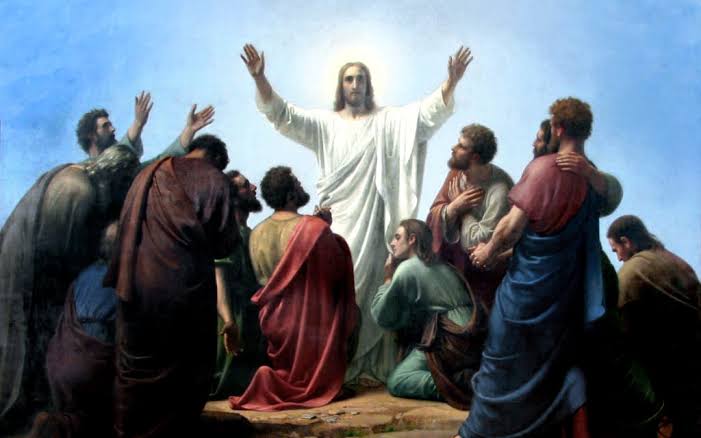
The account of the Ascension marks the formal conclusion of Jesus’s post-resurrection ministry on Earth and the critical transition of authority and purpose to His disciples. Occurring 40 days after His resurrection, this event is far more than a simple departure; it is a moment of commissioning, promise, and theological significance.
The Context and the Question
The scene opens with the disciples gathered with the resurrected Jesus. Their understanding, still shaped by nationalistic hopes, is revealed in their question: “Lord, are you at this time going to restore the kingdom to Israel?” (Acts 1:6). They were anticipating a political and military Messiah who would overthrow Roman occupation and re-establish Israel’s earthly sovereignty. This question highlights their lingering misconception of the nature of Christ’s kingdom.
The Redirected Commission
Jesus’s response is a masterful redirection. He does not rebuke them but shifts their focus from chronology (“It is not for you to know the times or dates the Father has set by his own authority.”) to vocation (Acts 1:7). He immediately follows this by outlining their true purpose in what is often called the Great Commission of Acts:
“But you will receive power when the Holy Spirit comes on you; and you will be my witnesses in Jerusalem, and in all Judea and Samaria, and to the ends of the earth.” (Acts 1:8).
This single verse serves as the programmatic outline for the entire Book of Acts. Let’s break down its components:
- The Power: The disciples would not be acting in their own strength. The promised “power” (from the Greek dunamis, from which we derive “dynamite”) is the enabling presence of the Holy Spirit, which would equip them for their task.
- The Task: Their role was to be “witnesses” (martys in Greek, the root of “martyr”). This involves testifying to what they had seen and heard concerning Jesus’s life, death, and resurrection.
- The Strategy: The mission would expand in concentric circles, starting from their immediate location (Jerusalem), moving to the surrounding region and a culturally hostile neighbor (Judea and Samaria), and finally extending to the entire known world (“the ends of the earth”).
The Event and the Promise of Return
Having delivered this final instruction, Jesus “was taken up before their very eyes, and a cloud hid him from their sight” (Acts 1:9). The Ascension is portrayed as a visible, physical event, signifying His exaltation and enthronement at the right hand of the Father. As the disciples stood gazing into the sky, two angelic beings appeared, offering both comfort and a renewed sense of purpose: “This same Jesus, who has been taken from you into heaven, will come back in the same way you have seen him go into heaven” (Acts 1:11).
The Ascension, therefore, is not an abandonment. It is the necessary prerequisite for sending the Holy Spirit and establishes Jesus’s ongoing heavenly reign. It concludes His earthly work and inaugurates the work of the Church, fueled by the promise of His power and the hope of His return.
Pentecost: The Empowerment of the Church (Acts 2:1-41)
Ten days after the Ascension, the disciples were gathered in Jerusalem, obeying Jesus’s command to wait for the promised Holy Spirit. The fulfillment of this promise occurred on the Day of Pentecost, a Jewish festival, and marks the official birthday of the Christian Church.
The Arrival of the Spirit
The event was dramatic and supernatural, engaging multiple senses. It began with “a sound like the blowing of a violent wind” that filled the house, followed by the appearance of “what seemed to be tongues of fire that separated and came to rest on each of them” (Acts 2:2-3). Wind and fire are classic Old Testament symbols of God’s presence and purifying power (a theophany). The result was immediate: “All of them were filled with the Holy Spirit and began to speak in other tongues as the Spirit enabled them” (Acts 2:4).
The significance of Pentecost (Shavuot) as the setting is profound. It was a harvest festival celebrating the first fruits, and for the nascent Church, it marked the first harvest of souls. It was also traditionally the day celebrating the giving of the Law to Moses on Mount Sinai. While the Law was written on tablets of stone, the new covenant promised by the prophets involved God writing His law on human hearts through His Spirit—a promise powerfully fulfilled at Pentecost.
The Miracle and the Crowd’s Reaction
The miracle of “tongues” (glossolalia) was not unintelligible ecstatic speech. The text specifies that God-fearing Jews from “every nation under heaven” who were in Jerusalem for the feast heard the disciples “declaring the wonders of God in our own tongues!” (Acts 2:11). This miraculous act of communication effectively reversed the curse of the Tower of Babel (Genesis 11), where language was confused and humanity was scattered. At Pentecost, language barriers were supernaturally overcome to unite people under the message of the Gospel.
The crowd’s reaction was a mixture of amazement and cynical mockery (“They have had too much wine.”). This provided the apostle Peter with the opportunity to deliver the first public sermon, or kerygma, of the Christian Church.
Peter’s Sermon and the First Converts
Peter, now emboldened by the Holy Spirit, stood and addressed the crowd. His sermon was a masterful exposition of how Jesus fulfilled Old Testament prophecy:
- Explanation: He refuted the charge of drunkenness and explained the phenomenon as the fulfillment of the prophet Joel’s promise that God would pour out His Spirit on all people (Joel 2:28-32).
- Proclamation: He boldly proclaimed that Jesus of Nazareth, whom they had crucified, was attested to by God through miracles.
- Proof: He declared that Jesus’s resurrection was the ultimate sign of His divinity, quoting from Psalm 16 to argue that God would not let His “Holy One” see decay.
- Exaltation: He concluded that the resurrected Jesus had been exalted to the right hand of God and had now poured out the very Spirit they were witnessing. His final, powerful declaration was: “Therefore let all Israel be assured of this: God has made this Jesus, whom you crucified, both Lord and Messiah” (Acts 2:36).
The response was profound. The people were “cut to the heart” and asked what they should do. Peter’s call to action established the pattern for Christian conversion: “Repent and be baptized, every one of you, in the name of Jesus Christ for the forgiveness of your sins. And you will receive the gift of the Holy Spirit” (Acts 2:38). On that day, about 3,000 people accepted his message and were baptized, and the Church was born.
The Mission of the Church: The Gospel Crosses Barriers (Acts 8)
For several years, the Church remained largely concentrated in Jerusalem. While growing numerically, it had not yet fulfilled the second and third stages of the commission from Acts 1:8—to be witnesses in Judea, Samaria, and to the ends of the earth. Acts 8 details how persecution ironically became the catalyst that propelled the church outward.
The Scattering of Believers
Following the martyrdom of Stephen (Acts 7), “a great persecution broke out against the church in Jerusalem, and all except the apostles were scattered throughout Judea and Samaria” (Acts 8:1). This persecution was spearheaded by a zealous Pharisee named Saul (who would later become the Apostle Paul). What was intended to extinguish the movement had the opposite effect. As the believers fled, they “preached the word wherever they went” (Acts 8:4). The mission was decentralized, carried forward not by a formal strategy but by the faithful witness of ordinary people driven from their homes.
The Mission to Samaria
The first major cross-cultural breakthrough occurred when Philip, one of the seven deacons appointed in Acts 6, went to a city in Samaria. The animosity between Jews and Samaritans was ancient and deeply entrenched. Yet, Philip proclaimed the Messiah there, performed signs, and many believed and were baptized, bringing “great joy in that city” (Acts 8:8). This act was a radical fulfillment of Jesus’s command to witness in Samaria and demonstrated that the Gospel was intended to break down long-standing ethnic and religious walls.
The Mission to the Ethiopian Eunuch
The second narrative in Acts 8 illustrates the mission moving toward “the ends of the earth.” The Holy Spirit explicitly guided Philip to a desert road to encounter an Ethiopian eunuch. This man was a significant figure in several respects:
- A Foreigner: As an Ethiopian, he represented a distant Gentile nation.
- A Religious Outsider: As a eunuch, he would have been excluded from full assembly in the Jerusalem Temple according to Old Testament law (Deuteronomy 23:1).
- A Seeker: He was a high-ranking official, a “God-fearer” who had been to Jerusalem to worship and was diligently reading the prophet Isaiah on his journey home.
Philip found him struggling to understand Isaiah 53, the prophecy of the Suffering Servant. Seizing the opportunity, “Philip began with that very passage of Scripture and told him the good news about Jesus” (Acts 8:35). The eunuch believed immediately and, upon seeing water, asked to be baptized. This conversion is profoundly significant, demonstrating that the Gospel is for all people, regardless of nationality, ethnicity, or social or physical condition. It symbolized the fulfillment of the final part of the commission—the good news was officially on its way to the ends of the earth.
References
- The Holy Bible, New International Version. (2011). Biblica, Inc.
- Bruce, F. F. (1988). The Book of the Acts (New International Commentary on the New Testament). Eerdmans.
- Stott, J. R. W. (1990). The Message of Acts: The Spirit, the Church & the World (The Bible Speaks Today Series). InterVarsity Press.
- Wright, N. T. (2008). Acts for Everyone, Part One: Chapters 1-12. Westminster John Knox Press.