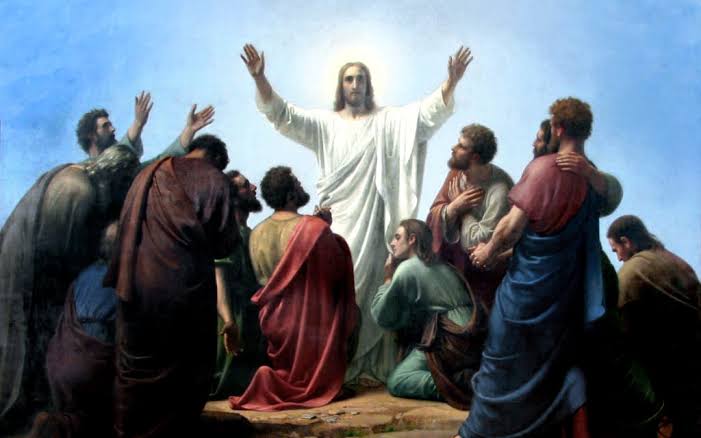

Of all the events recorded in human history, the final hours of Jesus Christ’s life are among the most scrutinized, debated, and revered. These events form the bedrock of Christian theology, encompassing themes of justice, sacrifice, suffering, and divine purpose.
The Trials of Christ
The trials of Jesus were not a single legal proceeding but a series of hearings, both religious and secular, conducted under immense political and social pressure. They transpired rapidly through the night and into the following day, culminating in a sentence that the presiding Roman governor appeared reluctant to give.
(i) The Trial Before the High Priest (Matthew 26:36-75)
Following his arrest in the Garden of Gethsemane, Jesus was taken not to a Roman court but to the residence of Caiaphas, the acting High Priest. Here, the Sanhedrin—the supreme council and tribunal of the Jews, composed of elders, scribes, and priests—had gathered for an illegal nighttime trial. Their objective was singular: to find a charge against Jesus that would justify a death sentence.
According to Matthew’s account, the prosecution’s case immediately faltered. The chief priests sought false testimony, but the witnesses they brought forward contradicted one another. Their statements were inconsistent and failed to meet the legal standard required for a capital conviction under Jewish law, which demanded the agreement of at least two witnesses. Some testified that Jesus had claimed he could destroy the temple of God and rebuild it in three days, but even on this point, their accounts did not align.
Throughout this initial phase, Jesus remained silent, offering no defense against the chaotic accusations. His silence so frustrated the High Priest that Caiaphas stood and confronted him directly. Placing Jesus under a religious oath, he demanded, “I charge you under oath by the living God: Tell us if you are the Messiah, the Son of God.”
This was the pivotal moment. Jesus broke his silence with a direct and unambiguous affirmation: “You have said so… But I say to all of you: From now on you will see the Son of Man sitting at the right hand of the Mighty One and coming on the clouds of heaven.” This statement was a direct claim to divinity and messianic authority, referencing Daniel 7:13. To the Sanhedrin, this was undeniable blasphemy.
In a dramatic gesture, Caiaphas tore his robes and declared, “He has spoken blasphemy! Why do we need any more witnesses? Look, now you have heard the blasphemy.” The council unanimously condemned him as worthy of death. What followed was not judicial solemnity but raw contempt; the guards and council members spat on Jesus, struck him with their fists, and mocked him. It was a religious verdict born of accusation and a forced confession, setting the stage for the political trial to follow.
(ii) The Trial Before Pilate and the Roman Authorities (Matthew 27:11-31)
While the Sanhedrin had condemned Jesus, they lacked the legal authority under Roman occupation to carry out a death sentence. Therefore, early in the morning, they brought Jesus to Pontius Pilate, the Roman governor of Judea. To secure a Roman execution, the charge had to be political, not religious. The accusation of blasphemy was irrelevant to Rome; the charge of sedition was not.
When Jesus stood before Pilate, the governor’s questioning was pragmatic and political: “Are you the king of the Jews?” Jesus’s reply was concise and non-confrontational: “You have said so.” He offered no further elaboration, remaining silent even as the chief priests and elders leveled numerous accusations against him. Pilate was reportedly amazed by Jesus’s stoicism and composure.
The governor seemed to perceive that the case was rooted in professional jealousy and religious infighting rather than a genuine threat to Roman rule. Seeking a way out, Pilate invoked a Passover custom of releasing one prisoner chosen by the crowd. He offered them a choice between Jesus and a notorious prisoner named Barabbas, who was held for insurrection and murder. Pilate likely assumed the crowd would choose the peaceful teacher over the violent criminal.
However, the chief priests persuaded the crowd to demand Barabbas’s release and Jesus’s crucifixion. When Pilate asked what crime Jesus had committed, the crowd, now a mob, simply shouted louder, “Crucify him!”
Recognizing that he was losing control and that a riot was imminent, Pilate performed a famous act of political theater. He took a basin of water, washed his hands before the crowd, and declared, “I am innocent of this man’s blood; it is your responsibility.” He then acceded to their demand. Jesus was handed over to be scourged—a brutal whipping with a flagrum that tore flesh from the body—and then subjected to mockery by the Roman soldiers. They stripped him, placed a scarlet robe on him, twisted a crown of thorns for his head, and put a staff in his hand as a mock scepter. They knelt before him in derision, hailing him as “king of the Jews,” before spitting on him and striking him. Finally, they led him away to be crucified.
(iii) The Trial Before Herod (Luke 23:6-12)
Luke’s Gospel provides a detail not found in Matthew: an intermediary hearing before Herod Antipas. Upon learning that Jesus was a Galilean, Pilate realized he fell under the jurisdiction of Herod, the tetrarch of Galilee, who happened to be in Jerusalem for the Passover. Eager to rid himself of this problematic case, Pilate sent Jesus to him.
Herod was intrigued. He had heard much about Jesus and hoped to see him perform a miracle. However, his curiosity was met with the same resolute silence Jesus had shown Pilate. Despite Herod’s many questions and the vehement accusations of the priests and scribes, Jesus refused to speak.
Frustrated and his curiosity unsatisfied, Herod’s attitude turned to contempt. He and his soldiers treated Jesus with scorn, dressing him in an elegant robe to mock his supposed kingship before sending him back to Pilate. While the hearing was legally fruitless—Herod passed no sentence—Luke notes a significant political outcome: “That day Herod and Pilate became friends—before this they had been enemies.” The case of Jesus had served as an unlikely bridge between two political rivals.
The Death of Christ
The culmination of these trials was the execution of Jesus by crucifixion, a Roman method of punishment reserved for the worst criminals and designed for maximum pain and public humiliation.
(i) The Crucifixion and Burial of Jesus Christ (Matthew 27:32-66)
Led from the governor’s praetorium, Jesus was forced to carry his cross toward the execution site, Golgotha, “the place of the skull.” Along the way, the soldiers compelled a passerby, Simon of Cyrene, to carry the cross, suggesting Jesus was too weakened from the scourging to continue.
At Golgotha, he was offered wine mixed with gall, a mild anesthetic, which he refused. The soldiers then crucified him, nailing his hands and feet to the wooden cross. They divided his clothes among themselves by casting lots. He was crucified between two thieves, a placement meant to further dishonor him.
Passersby, religious leaders, and even one of the criminals crucified with him hurled insults, mocking his claim to be the Son of God and challenging him to save himself. From the sixth hour (noon) until the ninth hour (3 p.m.), darkness covered the land. At the end of this period, Jesus cried out and died.
At the moment of his death, Matthew records a series of supernatural events: the curtain of the temple in Jerusalem, which separated the Holy of Holies from the rest of the temple, was torn in two from top to bottom; the earth shook; rocks split; and tombs were opened. The Roman centurion and the soldiers guarding Jesus, witnessing these phenomena, were terrified and exclaimed, “Truly this was the Son of God!”
As evening approached, a wealthy disciple named Joseph of Arimathea, a respected member of the Sanhedrin, boldly went to Pilate and asked for Jesus’s body. Pilate granted his request. Joseph took the body, wrapped it in a clean linen cloth, and placed it in his own new tomb, which had been cut out of the rock. He then rolled a large stone across the entrance. The next day, concerned that the disciples might steal the body to feign a resurrection, the chief priests secured Pilate’s permission to post a Roman guard at the tomb and seal the stone.
(ii) The Words of Jesus on the Cross
The Gospels record several statements made by Jesus from the cross, each offering profound theological insight.
- “Father, forgive them, for they know not what they do.” (Luke 23:34): Spoken as the soldiers were crucifying him, this statement is a radical expression of grace and pardon. Even in his agony, his focus was on intercession for his executioners, attributing their actions to ignorance.
- “Truly, I say to you, today you will be with me in Paradise.” (Luke 23:43): This was his response to one of the criminals crucified beside him, who, in a moment of faith, asked Jesus to remember him. The promise is one of immediate salvation and fellowship with God, offered in response to a simple plea for mercy.
- “Eli, Eli, lema sabachthani?” (“My God, my God, why have you forsaken me?”) (Matthew 27:46; Mark 15:34): Perhaps the most harrowing of his words, this cry from the cross quotes the opening of Psalm 22. It expresses a profound sense of divine abandonment. In Christian theology, this is understood as the moment Jesus took upon himself the full weight of human sin, experiencing the separation from God the Father that sin causes. It is a cry of both immense suffering and deep humanity.
- “Father, into your hands I commit my spirit.” (Luke 23:46): These were his final words in Luke’s account. Quoting from Psalm 31:5, this statement is not one of defeat but of ultimate trust and willing surrender. Having completed his work, he peacefully commits his life back to God the Father.
References:
- The Holy Bible, English Standard Version. (2016). Crossway Bibles.
- Carson, D. A. (1991). The Gospel According to Matthew. The Pillar New Testament Commentary. Eerdmans.
- Wright, N. T. (1996). Jesus and the Victory of God. Fortress Press.
- Green, J. B. (1997). The Gospel of Luke. The New International Commentary on the New Testament. Eerdmans.