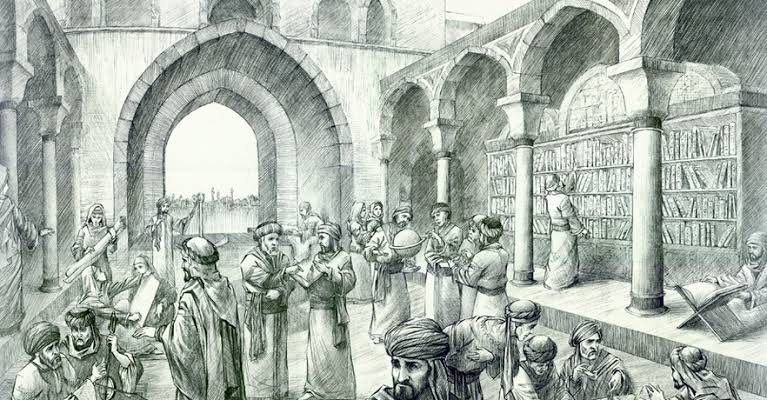

In the annals of Islamic intellectual history, few figures command as much reverence and authority as Imam Malik ibn Anas. As a jurist, traditionist, and the eponym of the Maliki school of Islamic law (Madhhab), his influence has shaped the religious and legal lives of millions for over a millennium. His magnum opus, the Muwatta, stands as a monumental achievement and one of the earliest surviving compendiums of Islamic law and prophetic traditions.
Evaluating the Biography of Imam Malik (c. 711–795 CE)
To understand the Muwatta, one must first understand the man who authored it. Imam Malik’s life was not merely a series of events; it was a testament to scholarly integrity, piety, and an unwavering commitment to preserving the sacred knowledge of Islam in its purest form.
1. The Scholar of Medina – A Life Immersed in Knowledge
Malik ibn Anas was born in Medina around 93 AH (711 CE). This fact is of paramount importance. Medina was not just any city; it was the city of the Prophet Muhammad (ﷺ), the home of his companions (Sahaba), and the first capital of the Islamic community. It was a living repository of the Sunnah—the Prophet’s teachings, actions, and approvals.
Growing up in this environment, Imam Malik had direct access to the students of the companions, known as the Tabi’in. He dedicated his entire life to seeking knowledge within this sacred city, famously refusing to leave it even when invited by caliphs. He studied under esteemed scholars such as Nafi’ Mawla ibn ‘Umar and Ibn Shihab al-Zuhri, creating an unbroken chain of transmission linking him directly back to the Prophet’s closest followers. This Medinan foundation became the bedrock of his legal methodology.
2. An Exemplar of Scholarly Character and Integrity
Evaluating Imam Malik’s biography reveals a character defined by three core principles: piety, intellectual honesty, and principled independence.
- Profound Piety (Taqwa): His reverence for the words of the Prophet Muhammad (ﷺ) was legendary. It is reported that he would never narrate a Hadith (prophetic tradition) without first performing ablution (wudu), wearing his best clothes, and sitting in a dignified manner. This was not mere ritual; it was a physical manifestation of his deep respect for the sacredness of the knowledge he was transmitting.
- Intellectual Honesty: Imam Malik was renowned for his frequent use of the phrase “La adri” (“I do not know”). In an era where scholars were revered for their answers, his willingness to admit the limits of his knowledge was a powerful lesson in humility and intellectual rigor. It established a critical principle: that it is better to remain silent than to speak on matters of religion without certainty.
- Principled Independence: Imam Malik’s scholarship was not subservient to political power. The most famous incident illustrating this is when the Abbasid governor of Medina demanded he issue a religious ruling (fatwa) that an oath of allegiance given under compulsion was still binding. Imam Malik refused, citing the Hadith, “There is no divorce for the one who is compelled.” For this principled stand, he was publicly flogged. Yet, he never wavered. This event cemented his reputation as a scholar who valued divine truth above worldly comfort or political favor.
3. The Teacher and Founder of a Legal Tradition
Imam Malik’s teaching circle in the Prophet’s Mosque became the most prominent center of learning in the Islamic world. Students traveled from as far as Andalusia (Spain) and Khorasan (Central Asia) to learn from him. His most famous student was Imam al-Shafi’i, who would go on to found his own school of law and held his teacher in the highest esteem.
Through his teachings and rulings, Imam Malik laid the foundation for the Maliki Madhhab. His jurisprudence, deeply rooted in the practices of the people of Medina, spread across North Africa, West Africa, Andalusia, and parts of the Arabian Peninsula, where it remains dominant today.
Analyzing the Work – The Muwatta
The Muwatta is the definitive embodiment of Imam Malik’s life and scholarship. Its name translates to “The Paved Path” or “The Well-Trodden Path,” signifying a clear and established legal methodology based on sound and authenticated sources.
(a) The Purpose and Genesis of the Book
The story of the Muwatta‘s compilation is tied to the Abbasid Caliph al-Mansur, who, upon visiting Medina, was so impressed by Imam Malik that he requested him to compile a book of law that could be standardized across the empire. Imam Malik, however, wisely refused the idea of a single, binding code, arguing that the companions of the Prophet had dispersed throughout the lands, carrying different aspects of the Sunnah with them, and that forcing one interpretation would be a disservice.
Instead, he compiled the Muwatta as a guide—a paved path, not a rigid cage. His purpose was to document the most reliable traditions and established legal practices of Medina to serve as a foundation for jurisprudence.
(b) A Unique Methodology and Structure
An analysis of the Muwatta reveals a unique and sophisticated methodology that distinguishes it from later Hadith collections like those of al-Bukhari or Muslim.
- A Hybrid of Hadith and Fiqh: The Muwatta is not purely a book of Hadith, nor is it purely a book of law (Fiqh). It is a masterful synthesis of both. Unlike later works organized by the chains of narrators, the Muwatta is structured according to legal chapters (e.g., Kitab al-Taharah – The Book of Purity, Kitab al-Salat – The Book of Prayer). This makes it an eminently practical manual for deriving legal rulings.
- A Hierarchy of Sources: Within each chapter, Imam Malik presents his sources in a clear hierarchy:
- Marfu’ Hadith: Verbatim sayings and actions traced directly back to the Prophet Muhammad (ﷺ).
- Athar of the Sahaba: Narrations and legal verdicts from the Prophet’s companions.
- Aqwal al-Tabi’in: The opinions and rulings of the generation that followed the companions.
- ‘Amal Ahl al-Madina’ (The Practice of the People of Medina): This is a cornerstone of Maliki jurisprudence and a unique feature of the Muwatta. Imam Malik argued that the consensus and continuous practice of the Medinan community was a powerful proof of the authentic Sunnah, as they were the direct inheritors of the Prophet’s societal norms.
- Imam Malik’s Own Ijtihad: When direct transmitted evidence was unavailable or ambiguous, he would apply his own juristic reasoning, which is clearly presented as his own opinion.
(c) Its Enduring Significance and Impact
The Muwatta holds a hallowed place in Islamic literature. Imam al-Shafi’i is reported to have said, “There is not on the face of the earth a book—after the Book of Allah—which is more authentic than the book of Malik.” (This was stated before the compilation of Sahih al-Bukhari and Sahih Muslim).
Its impact is multifaceted:
- A Foundational Text: It is the foundational text of the Maliki school, providing the primary source material for its legal framework.
- A Methodological Blueprint: It set a precedent for systematically combining revealed texts (Qur’an and Hadith) with legal reasoning and communal practice.
- A Standard for Authenticity: Imam Malik’s painstaking verification of narrators and traditions set an early standard for the critical science of Hadith authentication that would be further developed by later scholars.
Conclusion
The life of Imam Malik ibn Anas and the text of the Muwatta are inextricably linked. His biography is an evaluation of unimpeachable scholarly ethics, deep piety, and intellectual courage. His book is an analysis of a meticulous legal mind at work, forging a clear path through the rich sources of Islamic law. Together, they represent a pivotal moment in Islamic history, where the prophetic legacy of Medina was organized into a coherent and enduring legal tradition that continues to guide and inspire Muslims worldwide.
References
- Dutton, Y. (1999). The Origins of Islamic Law: The Qurʼan, the Muwaṭṭaʼ and Madīnan ʻAmal. Routledge.
- Bewley, A. (Trans.). (2001). Al-Muwatta of Imam Malik Ibn Anas: The First Formulation of Islamic Law. The Islamic Supreme Council of America.
- Brown, J. A. C. (2009). Hadith: Muhammad’s Legacy in the Medieval and Modern World. Oneworld Publications.
- Hallaq, W. B. (2005). The Origins and Evolution of Islamic Law. Cambridge University Press.
- Nadwi, A. H. A. (2007). The Four Imams: Their Lives, Works and their Schools of Thought. UK Islamic Academy.