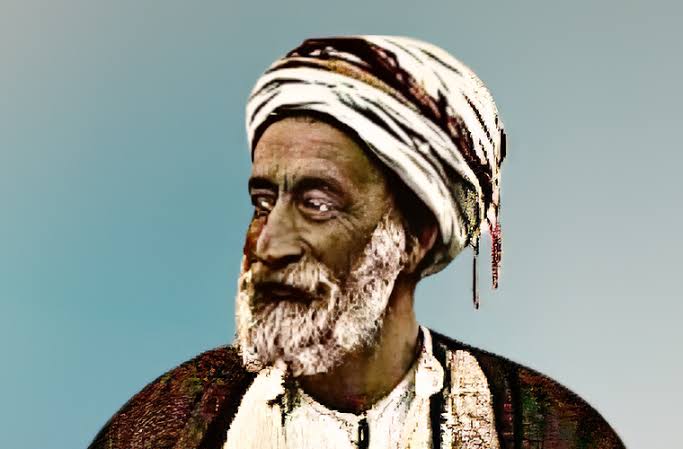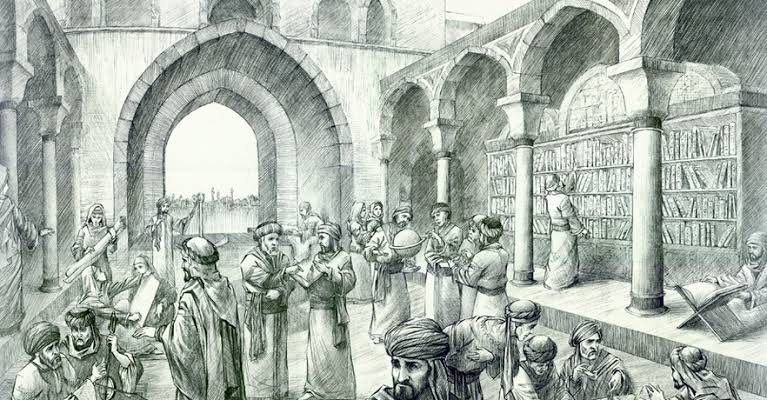

The Islamic Golden Age, spanning roughly from the 8th to the 14th century, was a period of remarkable intellectual and cultural flourishing. Scholars from across the Muslim world engaged in a dynamic process of preserving, translating, and building upon the knowledge of ancient civilizations, including Greek, Persian, and Indian traditions. This era produced polymaths whose work transcended disciplinary boundaries and laid the epistemological foundations for future generations in both the East and the West. Among the most luminous figures of this period were Ibn Sina, al-Ghazali, Ibn Rushd, al-Razi, and Ibn Khaldun. Their contributions to medicine, education, philosophy, and the social sciences not only defined the intellectual landscape of their time but continue to resonate in modern academia.
1. Ibn Sina’s Contributions to the Development of Medicine
Abu Ali al-Husayn ibn Abd Allah ibn Sina (c. 980–1037), known in the West as Avicenna, was a Persian polymath whose influence on the field of medicine is nearly unparalleled. His most significant contribution is the monumental encyclopedia, Al-Qanun fi’l-Tibb (The Canon of Medicine). This five-volume work was not merely a compilation of existing knowledge but a systematic and comprehensive synthesis of Greco-Roman medical traditions (particularly Galen), Persian and Indian practices, and his own extensive clinical observations. The Canon’s revolutionary structure organized medical knowledge with logical precision, covering general principles, anatomy, simple drugs (materia medica), diseases affecting specific parts of the body, and complex compound medicines.
Ibn Sina’s genius lay in his methodical approach. He introduced the concepts of clinical trials and evidence-based medicine, advocating for the testing of new drugs under controlled conditions. He was among the first to correctly identify the contagious nature of diseases like tuberculosis, proposing that they spread through minute particles in the air and water, and he advocated for quarantine as a method to limit their transmission. Furthermore, his work detailed surgical procedures, including the treatment of cataracts and the use of anesthetic sponges, and provided sophisticated descriptions of anatomy and physiology. Critically, Ibn Sina also pioneered the field of psychosomatic medicine, recognizing the profound link between emotional well-being and physical health. His Canon became the preeminent medical textbook in the Islamic world and, after being translated into Latin, served as a standard medical text in European universities for over 600 years, profoundly shaping the development of medicine well into the early modern period.
2. Al-Ghazali’s Contribution to Islamic Education
Abu Hamid Muhammad ibn Muhammad al-Ghazali (c. 1058–1111), or Algazel, was a theologian, jurist, and mystic whose work fundamentally reshaped the landscape of Islamic education and thought. His primary contribution was his masterful synthesis of the orthodox Islamic sciences—theology (kalam), law (fiqh), and Quranic studies—with the introspective, spiritual path of Sufism. Al-Ghazali argued that true knowledge was not merely an intellectual exercise but a means of spiritual purification and attaining closeness to God. This perspective shifted the ultimate goal of education from pure rationalism or legal mastery to the holistic development of the individual’s moral and spiritual character (tazkiyat al-nafs).
His magnum opus, Ihya’ Ulum al-Din (The Revival of the Religious Sciences), is a comprehensive manual for the Muslim life, meticulously detailing how to integrate worship, daily conduct, ethics, and spiritual discipline. This work became a cornerstone of curricula in Islamic educational institutions for centuries. Within his educational framework, al-Ghazali famously distinguished between two types of knowledge: fard 'ayn (individually obligatory knowledge), which every Muslim must learn (e.g., the basics of faith and worship), and fard kifayah (communally obligatory knowledge), which includes specialized sciences like medicine, mathematics, and agriculture that are necessary for the well-being of society but require only a sufficient number of specialists. This classification provided a robust framework for a balanced educational system that served both the spiritual needs of the individual and the practical needs of the community. Through his powerful critique of the limits of pure philosophy in Tahafut al-Falasifa (The Incoherence of the Philosophers), he re-centered Islamic education on a foundation of faith complemented by reason, creating a powerful and enduring synthesis that continues to influence Islamic pedagogy today.
3. Ibn Rushd’s Contribution to Philosophy and Fiqh
Abu al-Walid Muhammad ibn Ahmad ibn Rushd (1126–1198), known as Averroes in the Latin West, was an Andalusian philosopher, physician, and jurist who championed rationalism and became Aristotle’s most important commentator. His primary philosophical contribution was his unwavering argument that philosophy and religion (specifically, reason and revelation) were not in conflict but represented two different paths to the same truth. In his seminal work, Tahafut al-Tahafut (The Incoherence of the Incoherence), a direct rebuttal to al-Ghazali, Ibn Rushd systematically defended the philosophical tradition of Aristotle and argued that rational inquiry was a valid, and even encouraged, method for understanding the universe and God’s creation. He posited that scripture has both an apparent, literal meaning for the masses and a deeper, allegorical meaning accessible to the philosophically trained elite through demonstrative reasoning. This hierarchical approach sought to harmonize faith and reason, ensuring a place for both within intellectual life.
In the field of Islamic jurisprudence (fiqh), Ibn Rushd’s contribution was equally significant. His masterwork, Bidayat al-Mujtahid wa Nihayat al-Muqtasid (The Distinguished Jurist’s Primer), is a landmark text in comparative law. Instead of simply stating the legal rulings of his own Maliki school, Ibn Rushd meticulously outlined the differing legal opinions of all major Sunni schools of thought on nearly every issue. He presented their evidence from the Qur’an and Sunnah and analyzed the juridical reasoning and methodologies that led to their divergent conclusions. This comparative method promoted critical thinking and intellectual rigor, encouraging jurists to understand the ‘why’ behind the law rather than blindly following received opinion (taqlid). His work in fiqh, therefore, mirrored his philosophical approach by emphasizing reason, evidence, and a deep understanding of first principles.
4. Al-Razi’s Contribution to Philosophy
Abu Bakr Muhammad ibn Zakariyya al-Razi (c. 865–925), or Rhazes, was a Persian physician and philosopher renowned for his radical rationalism and unyielding empiricism. While his medical achievements, such as differentiating between smallpox and measles, are legendary, his philosophical contributions were equally bold, though far more controversial. Al-Razi placed reason (‘aql) as the ultimate source of knowledge, superior to both tradition and divine revelation. He believed that God had endowed humans with reason so that they could apprehend truth for themselves, making prophetic guidance redundant. This fiercely independent stance set him apart from the mainstream of Islamic thought, which sought to harmonize reason with revelation.
Central to his metaphysical system was the doctrine of the “five eternals”: God, the Soul, Matter, Time, and Space. He argued that these five principles were co-eternal and uncreated, a view that sharply contradicted the orthodox Islamic doctrine of creation ex nihilo (from nothing). Drawing on Platonic ideas, al-Razi envisioned a cosmology where the Soul, in its ignorance, became attached to Matter, leading to the creation of the world. The purpose of human life, through the gift of reason, was to liberate the Soul from its material entanglement and return it to its pure state. Al-Razi’s ethical philosophy was also profoundly humanistic; he championed equality, compassion for all living beings, and the pursuit of a just and knowledgeable life. Although his philosophical works were largely suppressed or ignored by later Islamic orthodoxy due to their perceived heresy, he remains a powerful example of pure rationalism and freethinking in the classical Islamic world.
5. Ibn Khaldun’s Contribution to Sociology and History
Abd al-Rahman ibn Muhammad ibn Khaldun (1332–1406) was an Arab historian, sociologist, and statesman from North Africa whose work was centuries ahead of its time. His greatest contribution is encapsulated in the Muqaddimah (literally, “The Introduction”), the opening volume of his world history, the Kitab al-‘Ibar. In the Muqaddimah, Ibn Khaldun established history as a new and independent science, moving it beyond mere chronicling of events to a critical analysis of the underlying forces that shape human civilization. He is widely regarded as a founder of modern sociology, historiography, and economics.
The cornerstone of his theory is the concept of ‘Asabiyyah, which can be translated as social cohesion, group solidarity, or collective consciousness. Ibn Khaldun argued that ‘asabiyyah is the primary engine of history—the force that enables a group to achieve dominance, build states, and establish dynasties. He posited a cyclical theory of history, observing that dynasties, like living organisms, go through predictable stages of growth, peak, and decay, often over four generations, as their founding ‘asabiyyah erodes with the comforts of urban civilization. His method was revolutionary because he systematically analyzed the impact of geography, climate, economics (supply and demand, taxation), and social structures on human behavior and historical development. By demanding a critical approach to sources and seeking universal laws governing societal change, Ibn Khaldun created a scientific method for writing history that was not rediscovered in Europe until the 19th century with thinkers like Comte, Durkheim, and Weber.
References
- Goodman, L. E. (2003). Islamic Humanism. Oxford University Press.
- Dallal, A. (2010). Islam, Science, and the Challenge of History. Yale University Press.
- McGinnis, J. (2010). Avicenna. Oxford University Press.
- Griffel, F. (2009). Al-Ghazali’s Philosophical Theology. Oxford University Press.
- Fakhry, M. (2001). Averroes (Ibn Rushd): His Life, Works and Influence. Oneworld Publications.
- Al-Khalili, J. (2011). The House of Wisdom: How Arabic Science Saved Ancient Knowledge and Gave Us the Renaissance. Penguin Books.