Of all the writings in the Pauline corpus, and indeed the entire New Testament, 1 Corinthians 15 stands as the most comprehensive and foundational treatise on the Christian doctrine of the resurrection. Often referred to as the “Resurrection Chapter,” it provides a systematic, step-by-step theological argument that moves from historical evidence to logical necessity, from eschatological vision to practical application. For the Apostle Paul, the resurrection of Jesus Christ is not a peripheral or abstract belief; it is the non-negotiable lynchpin upon which the entire Christian faith stands or falls.
The Foundational Proclamation of the Gospel (1 Corinthians 15:1-11)
Paul begins not with abstract philosophy but with a firm reminder of the historical gospel—the core message he had previously delivered to the Corinthian church. He defines this gospel as the news “by which you are being saved, if you hold fast to the word I preached to you” (v. 2). He emphasizes that this message is not his own invention but a sacred tradition he himself “received” and then “delivered.”
The content of this tradition is a four-fold historical proclamation:
- Christ died for our sins in accordance with the Scriptures. This establishes the theological purpose of His death—it was a substitutionary atonement.
- He was buried. This detail confirms the reality and finality of His death. He was not merely unconscious or in a swoon; He was certifiably dead.
- He was raised on the third day in accordance with the Scriptures. This is the central, history-altering event, foretold by prophecy.
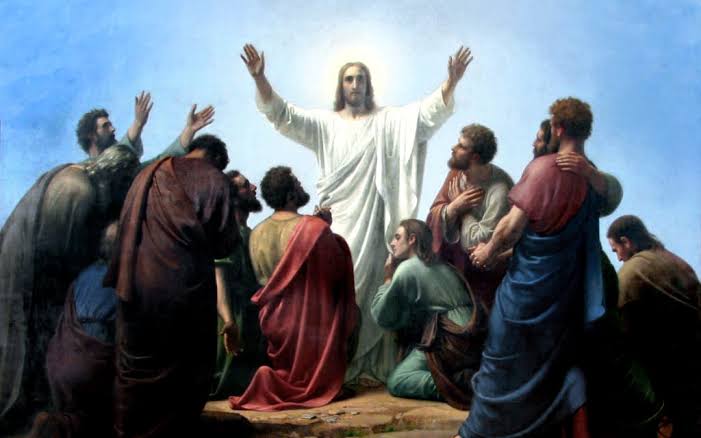
- He appeared to eyewitnesses. Paul substantiates this claim by listing a series of post-resurrection appearances: to Cephas (Peter), then to the Twelve, then to more than five hundred brothers at one time (most of whom were still alive and could be questioned), then to James, then to all the apostles, and finally, “as to one untimely born,” to Paul himself.
This opening section grounds the resurrection in historical testimony. Paul’s argument is evidential; he is presenting the case for a verifiable event witnessed by numerous individuals, positioning the resurrection not as a myth or a feeling, but as a fact of history upon which faith is built.
The Indispensable Reality of Christ’s Resurrection (1 Corinthians 15:12-19)
Having established the content of the preached gospel, Paul confronts a heresy that had infiltrated the Corinthian church: the denial of a future bodily resurrection for believers. He addresses this by demonstrating the catastrophic logical consequences of such a belief. Using a form of argument known as reductio ad absurdum, he shows that denying the general resurrection of the dead necessitates the denial of Christ’s own resurrection.
If Christ has not been raised, Paul argues, then a devastating chain reaction of seven conclusions follows:
- Our preaching is in vain (v. 14). The apostles’ message would be empty and meaningless.
- Your faith is in vain (v. 14). The Corinthians’ belief would be based on a falsehood.
- We are found to be misrepresenting God (v. 15). The apostles would be liars, falsely testifying that God performed an act He did not.
- Your faith is futile (v. 17). This goes beyond “vain” to suggest it is utterly useless and without effect.
- You are still in your sins (v. 17). The resurrection was God’s vindication of Christ’s sacrifice. Without it, there is no proof that His death successfully atoned for sin.
- Those who have fallen asleep in Christ have perished (v. 18). Deceased believers are not awaiting a future life; they are simply gone forever.
- We are of all people most to be pitied (v. 19). If the Christian hope is limited to this life, then believers who endure persecution, suffering, and self-denial for their faith are the world’s biggest fools.
This section powerfully illustrates that the resurrection is not an optional add-on to Christianity. It is the very foundation of its hope, meaning, and power.
The Order and Cosmic Significance of the Resurrection (1 Corinthians 15:20-28)
After outlining the bleak alternative, Paul makes a triumphant turn: “But in fact Christ has been raised from the dead” (v. 20). He then introduces a crucial agricultural metaphor: Christ is the “firstfruits of those who have fallen asleep.” In ancient Israel, the firstfruits were the first part of the harvest offered to God, serving as a guarantee that the rest of the full harvest was to come. Likewise, Christ’s resurrection is the guarantee and pattern for the future resurrection of all believers.
Paul then develops a profound Adam-Christ typology. Just as death entered the human experience through one man, Adam, so the resurrection of the dead comes through one man, Christ. This leads to a description of the eschatological timeline, or the order (tagma) of resurrection events:
- Christ, the firstfruits. His resurrection has already occurred.
- Then, at his coming, those who belong to Christ. The resurrection of believers will happen at the parousia, or Christ’s second coming.
- Then the end (telos). This final stage involves Christ delivering the kingdom to God the Father after destroying every rule, authority, and power. His reign continues until all enemies are subjected, with the final enemy to be destroyed being death itself.
This section elevates the resurrection from a personal hope to an event of cosmic significance. It is the means by which God’s ultimate victory over sin, evil, and death is achieved and His universal kingdom is established.
The Nature of the Resurrection Body (1 Corinthians 15:35-49)
Paul anticipates the skeptical questions of his opponents: “How are the dead raised? With what kind of body do they come?” (v. 35). To answer this, he employs a series of analogies and contrasts to explain the nature of the resurrected body.
First, he uses the analogy of a seed. A seed must be “sown” and “die” in the ground before it can grow into a new plant. The body that grows is radically different from the seed that was planted, yet there is a clear continuity between them. So it is with the resurrection body: the mortal body is “sown” in death, and a new, transformed body is raised.
He then draws a series of contrasts to describe this transformation:
- Sown in perishability, raised in imperishability. The mortal body decays; the resurrected body will be eternal.
- Sown in dishonor, raised in glory. The mortal body is subject to weakness and shame; the resurrected body will be radiant and glorious.
- Sown in weakness, raised in power. The mortal body is frail; the resurrected body will possess divine power.
- Sown a natural body (soma psychikon), raised a spiritual body (soma pneumatikon). This is the key contrast. A “natural body” is one animated by the soul (psyche), suited for earthly existence. A “spiritual body” is not a non-physical entity but a physical body perfectly animated and empowered by the Holy Spirit (pneuma), suited for the age to come.
He concludes this section by returning to the Adam-Christ typology. We have borne the image of the man of dust (Adam); in the resurrection, we shall bear the image of the man of heaven (Christ).
The Ultimate Victory and Final Exhortation (1 Corinthians 15:50-58)
Paul brings his argument to a powerful climax, revealing a “mystery”—a previously hidden truth now made known. He explains that “flesh and blood cannot inherit the kingdom of God,” meaning our current mortal bodies are unfit for eternal life. Therefore, a transformation is necessary for all believers, both the dead and the living, at Christ’s return.
This change will be instantaneous: “in a moment, in the twinkling of an eye, at the last trumpet” (v. 52). The dead will be raised imperishable, and the living will be changed. The perishable will be clothed with the imperishable, and the mortal with immortality.
When this happens, Old Testament prophecies will be fulfilled. Paul triumphantly quotes from Isaiah 25:8 and Hosea 13:14, personifying Death and taunting it as a defeated foe: “O death, where is your victory? O death, where is your sting?” The “sting of death” is sin, and the power of sin is the law. But thanks to the victory won through Jesus Christ, both sin and death are conquered.
Based on this magnificent theological vision, Paul concludes with a practical exhortation: “Therefore, my beloved brothers, be steadfast, immovable, always abounding in the work of the Lord, knowing that in the Lord your labor is not in vain” (v. 58). The certainty of the resurrection gives ultimate meaning, purpose, and endurance to Christian service in the present life. It is the fuel for unwavering hope and tireless work.
References
- Fee, Gordon D. The First Epistle to the Corinthians. The New International Commentary on the New Testament. Grand Rapids, MI: Eerdmans, 1987.
- Thiselton, Anthony C. The First Epistle to the Corinthians: A Commentary on the Greek Text. The New International Greek Testament Commentary. Grand Rapids, MI: Eerdmans, 2000.
- Wright, N. T. The Resurrection of the Son of God. Christian Origins and the Question of God, Vol. 3. Minneapolis, MN: Fortress Press, 2003.
- The Holy Bible, English Standard Version. Wheaton, IL: Crossway Bibles, 2016.