
Islam’s arrival in West Africa marked a profound turning point, shaping its socio-political, economic, and cultural landscapes for over a millennium. Unlike its expansion in other regions, Islam’s diffusion across the vast savanna and Sahel was largely a gradual, peaceful process, driven by a diverse array of agents rather than immediate conquest.
The Pathways of Islam’s Diffusion in West Africa
The propagation of Islam in West Africa was a multifaceted phenomenon, influenced by various groups and practices that incrementally integrated the new faith into existing societal structures.
1. The Role of Trans-Saharan Trade and Traders
The most significant conduit for Islam’s initial entry into West Africa was the trans-Saharan trade network. From the 8th century onwards, Muslim Berber and Arab traders traversed the Sahara, connecting North Africa with the lucrative markets of the sub-Saharan region, particularly for gold, salt, and kola nuts. These traders, driven by economic imperatives, were also carriers of their faith and culture.
- Peaceful Penetration: Unlike military campaigns, the traders’ interactions were primarily commercial, fostering trust and mutual respect. They settled in trading towns like Awdaghust, Gao, and Djenné, establishing Muslim quarters that served as early centers of Islamic life.
- Economic Incentives: African rulers and merchants recognized the economic benefits of adopting Islam, as it facilitated trade relations with their North African counterparts who shared a common legal and ethical framework. Conversion often granted access to wider commercial networks and financial instruments.
- Cultural Exchange: Beyond commerce, traders introduced new technologies, architectural styles, legal principles, and administrative practices, subtly weaving Islamic elements into the fabric of local societies.
2. The Influence of Islamic Scholars and Teachers
Accompanying or following the traders were Islamic scholars (Ulama) and teachers, known as marabouts. These individuals played a crucial role in deepening the understanding and practice of Islam beyond mere commercial convenience.
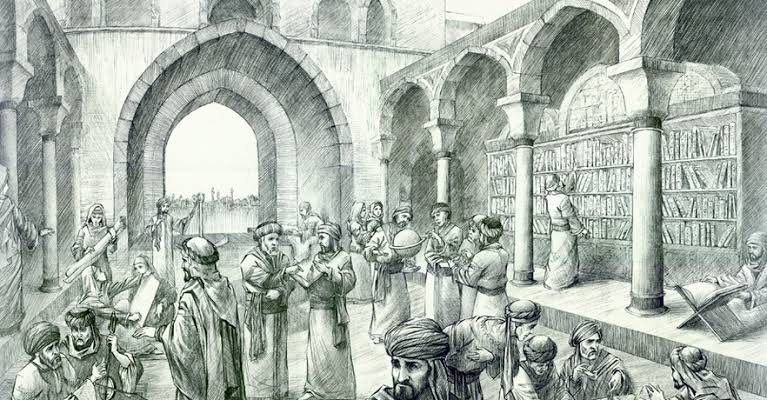
- Education Centers: They established madrasas (schools) and mosques, turning cities like Timbuktu, Djenné, and Gao into renowned centers of Islamic learning. These institutions taught Arabic, Qur’anic studies, Islamic law (Sharia), theology, and other sciences.
- Advisors to Rulers: Many scholars served as advisors, scribes, and judges (qadis) in royal courts, influencing state administration, legal systems, and foreign policy. Their literacy in Arabic was invaluable for record-keeping and diplomatic correspondence.
- Religious Guidance: They provided spiritual guidance, conducted religious ceremonies, and resolved disputes according to Islamic jurisprudence, gradually converting local populations through persuasion and example rather than force.
3. The Impact of the Murābitūn (Almoravid Movement)
The Murābitūn, or Almoravids, represent a more militant phase in the history of Islam in West Africa, though their direct territorial control was limited. Originating among the Sanhaja Berber tribes of the Sahara in the 11th century, they were a puritanical Islamic reform movement.
- Religious Zeal: Driven by a desire to purify Islamic practice and enforce strict adherence to the Maliki school of law, they launched jihads (holy wars) against what they perceived as lax or syncretic forms of Islam.
- Influence on Ghana: While they did not conquer the entire Ghana Empire, their military pressure contributed to its decline in the late 11th century. Their brief occupation of Awdaghust and interaction with Ghana’s capital indirectly fostered greater Islamic influence in the region.
- Maliki Law: The Almoravids significantly reinforced the dominance of the Maliki school of jurisprudence, which remains the prevalent legal tradition in West Africa to this day.
4. The Pervasive Reach of Sufi Orders
Sufism, the mystical dimension of Islam, played a vital role in its popularization among the masses. Sufi orders (Tariqas) emphasized personal piety, spiritual devotion, and community building, often adapting Islamic teachings to local cultural contexts.
- Mystical Appeal: Their emphasis on saints (walis), devotion, and communal rituals resonated with existing African spiritual traditions, making Islam more accessible and appealing.
- Key Orders: The Qadiriyya, founded by Abd al-Qadir al-Jilani, was one of the earliest and most widespread orders in West Africa, followed by the Tijaniyya and Muridiyya in later centuries. These orders established networks of zawiyas (lodges/centers), acting as hubs for religious instruction, social welfare, and economic activity.
- Community Integration: Sufi shaykhs (spiritual leaders) acted as mediators, healers, and educators, fostering strong bonds within communities and facilitating the gradual integration of Islamic practices into everyday life.
5. The Catalytic Role of the Hajj Pilgrimage
The annual pilgrimage to Mecca (Hajj) was a powerful catalyst for the spread and deepening of Islamic knowledge and practice in West Africa.
- Global Connection: The Hajj connected West African Muslims to the broader Islamic world, allowing them to witness the devotion of millions, exchange ideas with scholars from diverse regions, and bring back new understanding and practices.
- Legitimization of Rulers: For rulers like Mansa Musa of Mali, undertaking the Hajj was an act of profound spiritual devotion and a strategic political statement. It enhanced their legitimacy, prestige, and diplomatic standing within the Dar al-Islam (House of Islam).
- Knowledge Transfer: Pilgrims often returned as learned individuals, carrying manuscripts, new ideas, and a renewed zeal for their faith. They served as informal ambassadors of Islamic culture and education, contributing to the establishment of new mosques and schools upon their return.
6. The Dynamics of the Mujaddidūn (Reform Movements)
From the 18th century onwards, a new wave of Islamic movements emerged, led by mujaddidun (reformers) who sought to purify Islamic practice and establish states governed strictly by Islamic law.
- Response to Perceived Syncretism: These movements, such as the Fula jihads led by figures like Usman dan Fodio in the Sokoto Caliphate, often arose in response to what they saw as the dilution of Islamic principles with local traditional practices.
- Establishment of Islamic States: The mujaddidun were instrumental in creating new, centralized Islamic polities that codified Sharia law, promoted Islamic education, and fostered a strong sense of Muslim identity.
- Expansion of Islamic Influence: While sometimes involving military conflict, these movements ultimately led to a more widespread and deeply rooted Islamic presence, particularly in areas like Northern Nigeria, Senegal, and Guinea.
The Transformative Impact of Islam on Ancient West African Empires
Islam profoundly reshaped the socio-political, economic, and linguistic fabric of the great West African empires, demonstrating its adaptability and enduring influence.
1. The Empire of Ghana (c. 300 – 1100 CE)
Though not fully Islamic, Ghana was the first major West African empire to experience significant Islamic influence.
- Socio-Political: Muslim advisors, scribes, and interpreters were present at the royal court, assisting in administration and foreign affairs. The capital, Kumbi Saleh, had distinct Muslim and non-Muslim quarters, fostering a degree of religious pluralism early on. The presence of Muslim legal scholars (Qadis) introduced elements of Islamic jurisprudence.
- Economic: Islam facilitated Ghana’s economic prosperity by integrating it into the wider trans-Saharan trade network. Muslim merchants introduced sophisticated commercial practices, accounting methods, and an common currency (gold dust), enhancing the efficiency and reach of trade. The use of written contracts and commercial law, influenced by Islam, provided greater security for transactions.
- Linguistic: Arabic became the language of commerce, diplomacy, and scholarship. While the local Soninke language remained dominant for everyday use, literate individuals used Arabic for records, correspondence, and religious texts. This laid the groundwork for future intellectual developments in the region.
2. The Empire of Mali (c. 1235 – 1600 CE)
Mali embraced Islam with enthusiasm, becoming a beacon of Islamic civilization in West Africa.
- Socio-Political: Islam became the state religion, providing a unifying ideology and legitimizing the rule of emperors like Mansa Musa. Islamic law (Maliki school of Sharia) was widely applied, particularly in urban centers and for commercial disputes. The empire developed a sophisticated, centralized bureaucracy staffed by literate Muslims, enhancing governance and record-keeping capabilities. The pilgrimage of Mansa Musa dramatically raised Mali’s international profile.
- Economic: Mali’s vast gold wealth was channeled into the trans-Saharan trade, which was dominated by Muslim merchants. Islamic economic principles, such as zakat (charity tax) and the prohibition of usury, influenced commercial practices. The pilgrimage routes became economic corridors, stimulating trade and infrastructure development. The introduction of coinage and a standardized system of weights and measures, facilitated by Arab influence, streamlined economic activities.
- Linguistic: Arabic flourished as the language of administration, higher education, and religious devotion. Timbuktu, Djenné, and Gao became renowned centers of Islamic scholarship, boasting extensive libraries and attracting scholars from across the Muslim world. The widespread use of Arabic script for writing local languages (e.g., in Ajami script) also began to emerge.
3. The Empire of Songhai (c. 1464 – 1591 CE)
Songhai succeeded Mali as the dominant power, further consolidating Islam’s role in governance and learning.
- Socio-Political: Under rulers like Askia Muhammad Toure (Askia the Great), Islam was institutionalized as the state religion. Askia centralized administration, appointed qadis throughout the empire, and based his legal system on Sharia. His pilgrimage to Mecca reinforced his legitimacy and connected Songhai directly with the wider Islamic world. The empire saw the establishment of a robust Islamic judiciary and a sophisticated system of land tenure based on Islamic principles.
- Economic: Songhai inherited and expanded upon Mali’s trans-Saharan trade networks, continuing to export gold, salt, kola nuts, and slaves. The use of Islamic financial instruments and commercial ethics facilitated robust trade with North African and Middle Eastern partners. Urban centers like Gao and Timbuktu became major commercial hubs due to the stable, Sharia-governed environment.
- Linguistic: Arabic continued its prominence as the language of scholarship and administration. Timbuktu’s Sankore University reached its zenith under Songhai, becoming an intellectual powerhouse. Thousands of manuscripts in Arabic were produced and preserved, covering diverse fields from astronomy to medicine and law. This further cemented Arabic as the academic lingua franca.
4. The Empire of Kanem-Borno (c. 800 – 1900 CE)
Located to the east of the other empires, Kanem-Borno’s interaction with Islam was equally profound and enduring.
- Socio-Political: The Sefuwa dynasty of Kanem-Borno formally adopted Islam around the 11th century under Mai Dunama Dabbalemi, integrating it into their monarchical structure. Islam provided a new basis for legal and political organization, leading to a more centralized administration. The empire developed strong diplomatic ties with North African and Mamluk Egypt through shared Islamic identity, facilitating political alliances and military expertise.
- Economic: Kanem-Borno controlled significant trade routes across the central Sahara, connecting the Chad Basin with North Africa. The adoption of Islam brought the empire into the broader Islamic economic sphere, enhancing its trade in livestock, textiles, and slaves. Muslim merchants and scholars residing in the capital, Njimi, stimulated economic growth.
- Linguistic: Arabic became the language of the court, official correspondence, and religious scholarship in Kanem-Borno. The empire maintained extensive libraries and attracted scholars, contributing to a rich intellectual tradition. Like in Mali and Songhai, the scholarly use of Arabic led to the development of written forms of local languages, particularly Kanuri, using the Arabic script (Ajami).
Conclusion
The spread of Islam in West Africa was a remarkable testament to its adaptability and the diverse ways in which a global religion can integrate with local cultures. From the peaceful propagation by traders and scholars to the reformist zeal of the Murābitūn and Mujaddidūn, and the spiritual allure of Sufi orders and the Hajj, each agent played a distinct yet interconnected role. The resulting impact on the ancient empires of Ghana, Mali, Songhai, and Kanem-Borno was transformative, forging new socio-political structures, stimulating economic prosperity through enhanced trade, and fostering a vibrant intellectual tradition expressed largely through the Arabic language. Islam’s legacy in West Africa is thus one of enduring cultural fusion, profound intellectual development, and a deeply rooted faith that continues to shape the region today.