The Islamic world has been home to countless scholars, reformers, and explorers whose intellectual pursuits left indelible marks on their societies and beyond.
Intellectual Activities of Ahmad Baba of Timbuktu, Sheikh al-Maghili, Sheikh Usman Dan Fodio, Sultan Muhammad Bello and Ibn Battuta
This section details the primary areas of intellectual engagement for each figure, highlighting their scholarly focus, literary output, and impact on the intellectual discourse of their time.
1. Ahmad Baba al-Timbuktu (1556–1627): The Timbuktu Polymath
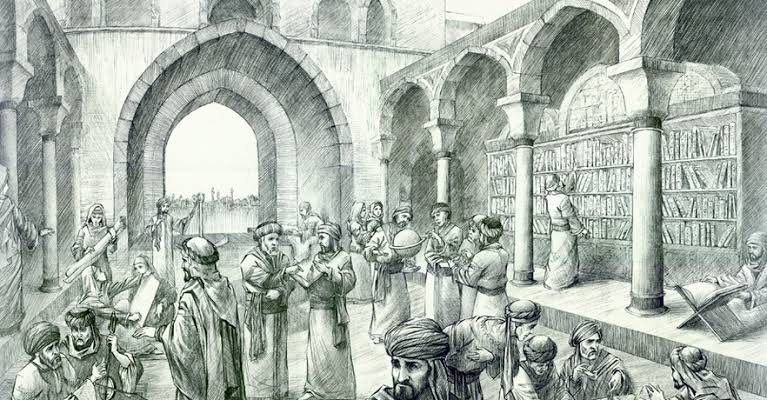
Ahmad Baba al-Timbuktu, a distinguished scholar from the vibrant intellectual hub of Timbuktu, was a Maliki jurist, historian, grammarian, logician, and astronomer. His intellectual activities were rooted in the traditional Islamic sciences, which he mastered through a rigorous curriculum at the Sankore University and other institutions. He came from a long line of scholars, inheriting a profound intellectual legacy. Ahmad Baba was particularly renowned for his expertise in fiqh (Islamic jurisprudence), nahw (Arabic grammar), and tafsir (Quranic exegesis).
His prolific output included over 40 known works, though many are lost. Among his most celebrated intellectual contributions is Nayl al-Ibtihaj bi Tatriz al-Dibaj, a biographical dictionary of Maliki scholars, which remains an invaluable source for understanding the intellectual history of West Africa. He also penned works on grammar and logic, demonstrating his breadth of knowledge. His intellectual independence was evident when, after the Moroccan invasion of Songhai in 1591, he was exiled to Marrakesh. Even during his captivity, he continued to teach and compile works, notably composing Mi’raj al-Sud ila Nayl al-Sudan (The Ascent of the Blacks to Attain the Sudan), which documented his observations on the intellectual and social life of West Africa, challenging prevailing misconceptions about Black Africans. His intellectual rigor and commitment to knowledge acquisition and dissemination solidified Timbuktu’s reputation as a beacon of learning.
2. Sheikh al-Maghili (d. c. 1504): The Reformist Jurist
Muhammad ibn Abd al-Karim al-Maghili, a prominent Tlemcen-born scholar, was a staunch proponent of Islamic reform and Maliki jurisprudence. His intellectual activities were characterized by a deep engagement with fiqh, hadith, and tawhid (Islamic monotheism), coupled with a fervent desire to purify Islamic practice from innovations (bid’ah) he deemed un-Islamic. Al-Maghili traveled extensively across North Africa and the Sahel, interacting with various rulers and communities, including Askia Muhammad of the Songhai Empire and the Hausa rulers.
His intellectual legacy is primarily preserved in his responsa (legal opinions or fatwas) and advice to rulers. He authored Mukhtasar fi Ajwibat al-Maghili (Abridged Replies of al-Maghili), a collection of his legal opinions covering a wide range of social, economic, and political issues. These writings showcase his intellectual approach to governance, emphasizing justice, adherence to the Sharia, and the eradication of polytheistic practices. His intellectual pursuits were not merely theoretical; he actively sought to implement his reformist vision through direct engagement with political leaders, providing them with detailed frameworks for Islamic governance and public piety. His intellectual output served as a bridge, transmitting Maliki legal traditions and reformist zeal from North Africa to West Africa.
3. Sheikh Usman Dan Fodio (1754–1817): The Scholar-Reformer of Sokoto
Sheikh Usman Dan Fodio was an extraordinary Islamic scholar, revivalist, and political philosopher who spearheaded the Sokoto Jihad and founded the Sokoto Caliphate. His intellectual activities were comprehensive, encompassing theology (aqida), jurisprudence (fiqh), Sufism (tasawwuf), political theory, and Hausa poetry. He possessed an encyclopedic knowledge of Islamic sciences, having studied under numerous scholars, most notably his uncle, Sheikh Jibril ibn Umar.
Dan Fodio’s intellectual project was fundamentally one of tajdid (renewal) and islah (reform). He critically analyzed the social and religious conditions of the Hausa states, arguing that they had deviated from true Islamic principles. His extensive literary output, exceeding 100 books and treatises, articulated his vision for an Islamic society. Key works include Ihya al-Sunnah wa Ikhmad al-Bid’ah (Revival of the Sunnah and Suppression of Innovation), which systematically argued against un-Islamic practices, and Bayan Wujub al-Hijra ala al-Ibad (Exposition of the Obligation of Emigration upon the Servants), a foundational text that justified his hijra (emigration) and subsequent jihad. He emphasized the importance of knowledge, promoting education for both men and women, and wrote in Arabic, Fulfulde, and Hausa to reach a broader audience. His intellectual activities were not confined to the mosque or study; they were directly linked to political action, culminating in the establishment of a vast Islamic state founded on his intellectual and legal principles.
4. Sultan Muhammad Bello (1779–1837): The Architect of the Caliphate
Sultan Muhammad Bello, the second Sultan of the Sokoto Caliphate and son of Sheikh Usman Dan Fodio, was a visionary scholar, administrator, and military strategist. His intellectual activities represented a continuation and consolidation of his father’s reformist agenda, adapted to the practicalities of governing a vast empire. Bello was a prolific writer, contributing significantly to Islamic scholarship, history, and medicine.
His intellectual interests were diverse, ranging from fiqh and Sufism to history and linguistics. His most famous historical work, Infaq al-Maysur fi Tarikh Bilad al-Takrur (The Facilitation of Resources in the History of the Lands of Takrur), offers a detailed account of the history of West Africa, particularly the rise of the Sokoto Caliphate. This work demonstrates his profound engagement with historical methodology and his desire to document the intellectual and political journey of his people. He also wrote extensively on statecraft, administration, and military science, drawing upon classical Islamic sources and his own practical experience. His medical treatise, Al-Tibb al-Nabawi (Prophetic Medicine), highlights his intellectual curiosity beyond purely religious or political themes. Bello’s intellectual activities were instrumental in providing the nascent Caliphate with a robust administrative and intellectual framework, translating his father’s reformist ideals into sustainable governance structures.
5. Ibn Battuta (1304–1368/9): The Global Explorer and Chronicler
Abu Abdallah Muhammad ibn Battuta, a Moroccan Berber scholar and explorer, stands out for his unparalleled intellectual activity as a chronicler of the medieval world. His primary intellectual pursuit was the systematic observation, documentation, and synthesis of the diverse cultures, geographies, and societies he encountered during his extensive travels (over 120,000 km) across the Islamic world and beyond. While trained as a qadi (judge) and often serving in this capacity, his enduring intellectual legacy is his travelogue, Rihlat Ibn Battuta (The Travels of Ibn Battuta), also known as A Gift to Those Who Contemplate the Wonders of Cities and the Marvels of Traveling.
Ibn Battuta’s intellectual method involved meticulous recording of his experiences: the customs of people, the political structures of states, the religious practices, the economic activities, and the physical geography of the regions he visited. He was not just a passive observer; he actively engaged with scholars, rulers, and common people, gathering information, participating in debates, and often serving as a qadi or advisor. His Rihla is therefore a monumental intellectual achievement, offering a unique firsthand perspective on the 14th-century world. It bridges gaps in historical knowledge, providing insights into regions from West Africa to China, detailing aspects of daily life, trade routes, religious centers, and the interconnectedness of the medieval Islamic world. His intellectual life was, in essence, a grand ethnographic and geographical survey conducted over three decades.
Assessment of the Contributions of Sheikh al-Maghili, Sheikh Usman Dan Fodio, Sultan Muhammad Bello and Ibn Battuta
This section evaluates the lasting impact and significance of the specified figures’ contributions to Islamic thought, governance, and the understanding of the world.
1. Contributions of Sheikh al-Maghili
Sheikh al-Maghili’s contributions were profoundly significant for West Africa, particularly his role in shaping the Islamic intellectual and political landscape. His major contribution lies in transmitting and solidifying Maliki jurisprudence and reformist thought from North Africa to the emerging states of the Sahel. His fatwas and political advice to rulers like Askia Muhammad of Songhai and the Hausa kings provided practical guidance on Islamic governance, justice, and the implementation of Sharia law. He advocated for a purge of syncretic practices and promoted a purer form of Islam, influencing later revivalist movements.
Moreover, al-Maghili served as an intellectual bridge, connecting West African scholarship with the broader Islamic intellectual tradition centered in North Africa. His writings became essential texts for students and scholars in the region, fostering a more rigorous engagement with Islamic law and theology. His emphasis on justice and good governance, as articulated in his advice to rulers, laid conceptual groundwork for Islamic statecraft that resonated for centuries, implicitly influencing subsequent reformers like Usman Dan Fodio. He thus contributed to the standardization of Islamic practice and legal principles across a vast geographical area, leaving a durable legacy in the intellectual and religious fabric of the region.
2. Contributions of Sheikh Usman Dan Fodio
Sheikh Usman Dan Fodio’s contributions are monumental, marking a pivotal turning point in West African history and Islamic thought. Foremost among them is the founding of the Sokoto Caliphate, a vast and enduring Islamic state that governed much of what is now northern Nigeria and Cameroon. This was not merely a military conquest but the establishment of a state founded on comprehensive Islamic principles, making it one of the largest and most successful Islamic reform movements in history.
His intellectual contributions are equally significant. Through his over 100 written works, Dan Fodio articulated a holistic vision for Islamic reform and social justice. He critiqued the perceived corruption and un-Islamic practices of the existing Hausa states, advocating for a return to the pristine Islam of the Prophet and his companions. His writings covered theology, jurisprudence, ethics, and political theory, providing the ideological and legal foundations for the Caliphate. He championed education for all, including women, a progressive stance for his time, and promoted the use of local languages alongside Arabic to disseminate knowledge. The Caliphate he founded became a major center of learning and a model for Islamic governance and scholarship, profoundly influencing later Islamic movements and shaping the socio-political identity of millions in West Africa. His emphasis on tajdid and islah continues to inspire Islamic activism and intellectual discourse in the region.
3. Contributions of Sultan Muhammad Bello
Sultan Muhammad Bello’s contributions were crucial for the consolidation, intellectual development, and long-term stability of the Sokoto Caliphate. As the first Sultan, he faced the immense challenge of transforming a revolutionary movement into a functioning state. His administrative acumen and military prowess were instrumental in expanding and securing the Caliphate’s borders.
Intellectually, Bello significantly contributed to documenting and articulating the Caliphate’s history and its administrative philosophy. His Infaq al-Maysur is not just a historical chronicle; it is also a foundational text for understanding the intellectual underpinnings of the Sokoto state, detailing its origins, legal justifications, and the biographies of its key figures. He further elaborated on Islamic jurisprudence, Sufism, and statecraft, ensuring that his father’s reformist ideals were not only preserved but also adapted and implemented effectively in a complex political entity. Bello fostered an environment of learning and scholarship, attracting scholars and promoting the production of Islamic literature, thus establishing Sokoto as a vibrant intellectual center. His contributions ensured that the Sokoto Caliphate was not merely a military success but also a thriving intellectual and administrative model that persisted for nearly a century and left a lasting legacy on the region’s cultural and political landscape.
4. Contributions of Ibn Battuta
Ibn Battuta’s singular contribution is his unrivaled travelogue, the Rihla, which stands as one of the most important primary sources for understanding the medieval world. His extensive journeys, covering vast swathes of Africa, Asia, and Europe, resulted in a detailed eyewitness account that is unparalleled in its scope and depth for its era.
The Rihla provides invaluable geographical, ethnographic, and historical documentation of the 14th century. It offers unique insights into the political structures, economic activities, social customs, religious practices, and intellectual life of numerous regions, many of which had limited direct contact with each other. For historians, his work is crucial for understanding the interconnectedness of the medieval Islamic world, outlining trade routes, centers of learning, and the spread of Islam. For example, his accounts of Mali and the Swahili coast are among the few contemporary indigenous sources for these regions. Beyond factual reporting, Ibn Battuta’s narrative offers a rich tapestry of human experience, demonstrating the diversity within the Islamic umma and the interactions between different cultures. His work thus serves as a cross-cultural bridge, allowing future generations to traverse the landscapes and societies of a bygone era, illuminating the complexities and vibrancy of the medieval world.
Conclusion
The intellectual activities and contributions of Ahmad Baba al-Timbuktu, Sheikh al-Maghili, Sheikh Usman Dan Fodio, Sultan Muhammad Bello, and Ibn Battuta highlight the dynamism and breadth of Islamic intellectual tradition. From the meticulous scholarship and principled resistance of Ahmad Baba, the reformist zeal and jurisprudential influence of al-Maghili, the transformative state-building and comprehensive reform agenda of Dan Fodio, and the administrative and scholarly consolidation by Muhammad Bello, to the unparalleled global documentation by Ibn Battuta, these figures collectively underscore the profound impact of scholarship, reform, and exploration on shaping societies, articulating governance, and fostering understanding across the vast Islamic world. Their legacies continue to resonate, offering invaluable insights into history, law, culture, and the enduring quest for knowledge and justice.
References
- Primary Sources:
- Al-Maghili, Muhammad ibn Abd al-Karim. Mukhtasar fi Ajwibat al-Maghili (Abridged Replies of al-Maghili).
- Baba, Ahmad. Nayl al-Ibtihaj bi Tatriz al-Dibaj.
- Baba, Ahmad. Mi’raj al-Sud ila Nayl al-Sudan.
- Battuta, Ibn. Rihlat Ibn Battuta (The Travels of Ibn Battuta). Trans. H.A.R. Gibb, et al.
- Dan Fodio, Usman. Ihya al-Sunnah wa Ikhmad al-Bid’ah (Revival of the Sunnah and Suppression of Innovation).
- Dan Fodio, Usman. Bayan Wujub al-Hijra ala al-Ibad (Exposition of the Obligation of Emigration upon the Servants).
- Bello, Muhammad. Infaq al-Maysur fi Tarikh Bilad al-Takrur (The Facilitation of Resources in the History of the Lands of Takrur).
- Secondary Sources (Academic Works & Journals):
- Bovill, E. W. The Golden Trade of the Moors. Oxford University Press, 1968.
- Curtin, Philip D. African History. Longman, 1988.
- Hunwick, John O. Timbuktu and the Songhay Empire: Al-Sa’di’s Ta’rikh al-Sudan Down to 1600 and Other Contemporary Documents. Brill, 1999.
- Levtzion, Nehemia and J.F.P. Hopkins. Corpus of Early Arabic Sources for West African History. Marcus Wiener Publishers, 2000.
- Last, Murray. The Sokoto Caliphate. Longman, 1967.
- Smith, H. F. C. “Ahmadu Bello’s Historical Scholarship.” Research in African Literatures 8, no. 1 (1977): 1–19.
- Hiskett, M. The Sword of Truth: The Life and Times of the Shehu Usuman Dan Fodio. Oxford University Press, 1973.
- Ross, Edward D. “Ibn Batuta: The Oriental Marco Polo.” Journal of the Royal Asiatic Society of Great Britain and Ireland (1928): 685-699.
- Wright, J. W. Jr., ed. The Travels of Ibn Battuta, A.D. 1325-1354. Royal Asiatic Society, 1929.